

A good content brief removes avoidable guesswork without dictating every sentence. It gives a writer enough context to make sound decisions, while leaving room for clear and natural writing. The brief should explain what the reader needs, what the company can substantiate and how the finished work will be reviewed.
If a draft misses the mark, the brief is a useful place to investigate. Was the audience unclear? Were the source materials missing? Did reviewers disagree about the goal? A short, complete brief makes these problems easier to address before revision time grows.
The Essential Brief Fields
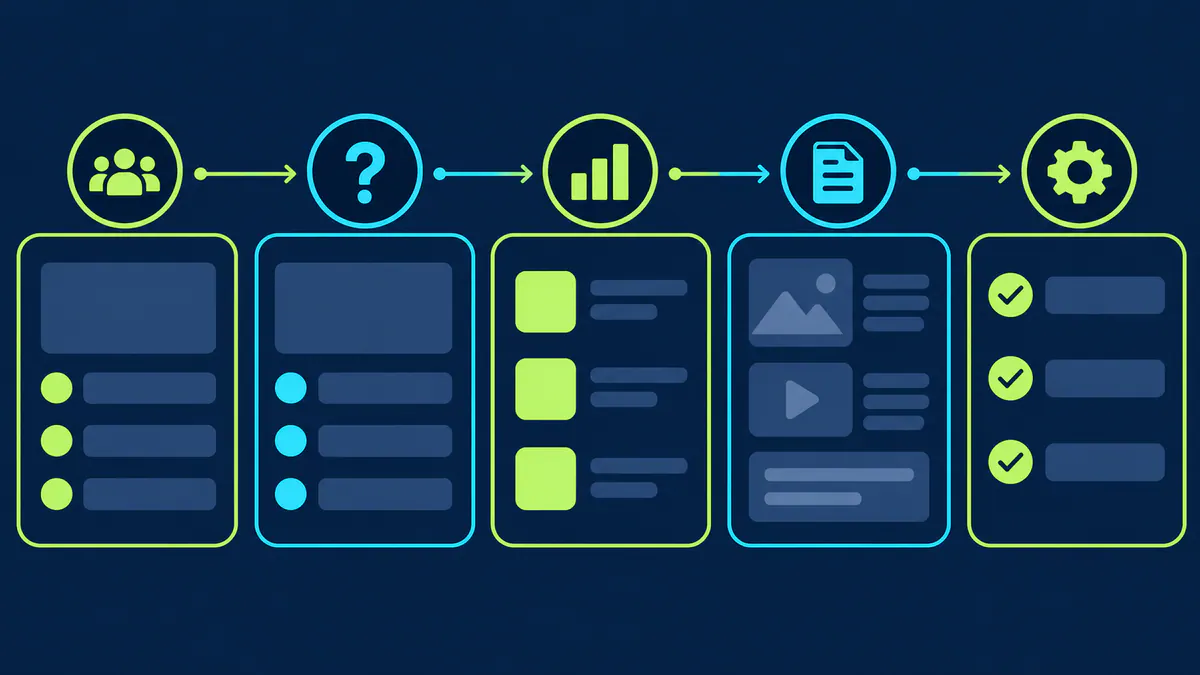
Start with a working title and one-sentence reader task. Identify the primary audience, the stage of their decision and what they should understand or be able to do after reading. Add the primary search phrase only after validating that it reflects the same intent; related wording can help capture natural language, but the brief should not become a keyword list.
Specify the format, scope and exclusions. A guide that compares options needs clear comparison criteria; a service explainer needs accurate service details. Link to existing pages that should be strengthened and note any topics the piece must not duplicate. List the evidence to collect, source owner, review date and any sensitive claims needing specialist approval.
Define Review And Completion Before Drafting
Name the writer, editor and subject reviewer if known. Set review responsibilities: the writer handles clarity and completeness; the editor checks structure, tone and overlap; the subject reviewer verifies specialist facts. Provide the CTA and its destination, but explain the reader benefit so it can fit naturally.

Define completion in observable terms: the piece answers its central question, has a descriptive heading structure, uses linked evidence, includes relevant internal links, and has checked images and accessibility details. Google advises people-first content and asks site owners to consider whether a reader has learned enough to meet their goal. A brief can operationalize that question for a particular assignment.
Copyable Brief Checklist
- Audience and one primary question
- Intended reader outcome and content format
- Search intent and distinct angle, validated against existing pages
- Required company facts, source URLs and evidence owner
- Outline, examples, exclusions and topics needing expert review
- Related internal destinations and CTA
- Writer, editor, reviewer, deadline and update trigger
- Image concepts, alt-text context and final approval criteria

Use this checklist with Sporteology’s content and creative services and its services catalogue. A template does not guarantee quality; it makes expectations and evidence easier to see.
Sources
- Google Search Central: Creating Helpful, Reliable, People-First Content
- Google Search Central: SEO Starter Guide