

A landing page should help a visitor understand one offer and decide whether to take the next step. It is not a universal conversion formula. The page’s structure depends on the audience, the complexity of the offer, the evidence available and what action is appropriate.
Plan The Main Sections Around Visitor Questions
Begin with a clear headline that describes the offer and a short explanation of who it is for. State the next action in concrete language. If visitors need proof before acting, provide relevant, verifiable details—such as the process, scope, eligibility or an accurately attributed example. Do not use broad claims that cannot be substantiated.
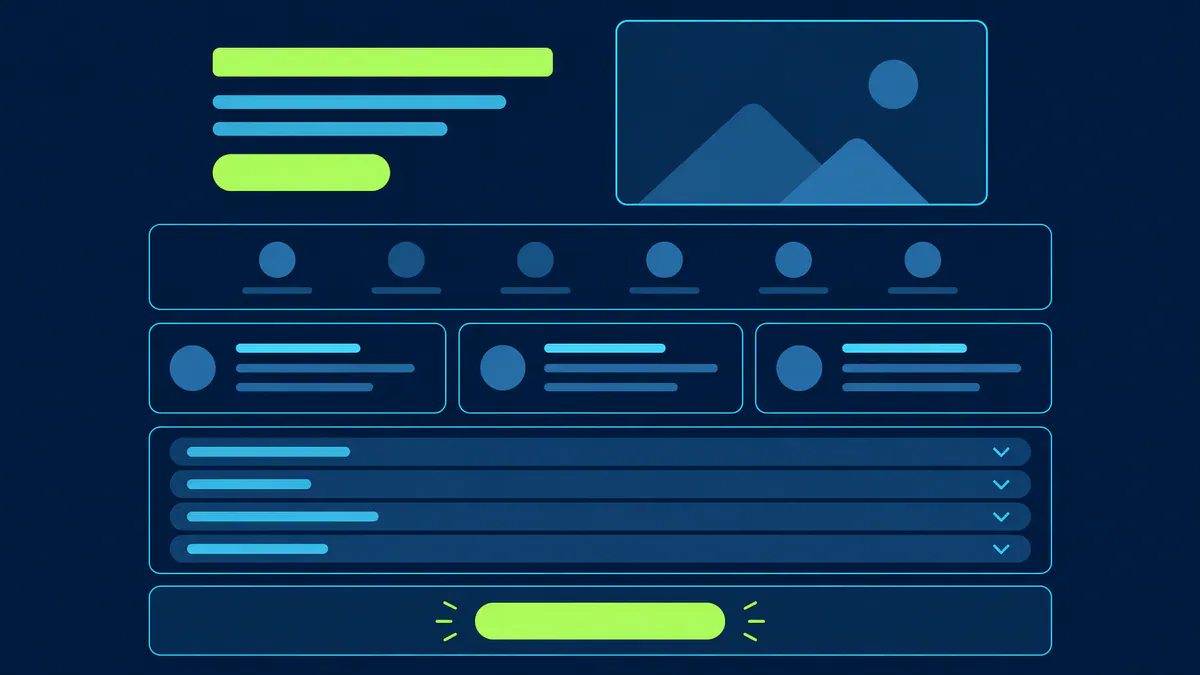
Use later sections to answer predictable questions: what is included, how the process works, what information is needed, what limitations apply and how to get help. Put important conditions near the claim they qualify. Keep navigation and competing actions from obscuring the page’s primary purpose.
Make The Form And Mobile Experience Clear
Ask only for information needed for the next step. Label every field, explain what happens after submission and provide a clear error message when something needs correction. If the page collects personal data, link to the relevant privacy information and follow the requirements that apply in the visitor’s jurisdiction.

Check the page at phone widths. Ensure the main message appears before a long scroll, buttons are easy to tap, text remains readable and the form does not cause horizontal scrolling. W3C’s WCAG contrast criteria offer a measurable check for text visibility; test actual foreground and background combinations, including text over images.
Measure The Intended Action Carefully
Define the event the page is meant to support, then check that analytics records it accurately. A form start is not a completed enquiry; a button click is not necessarily a qualified lead. Report what was measured and where the measurement may be incomplete.

Sporteology’s Publishing & Conversion services bring together page content and publishing, while web development covers implementation. A well-structured page can support a visitor’s decision, but no layout guarantees a particular conversion rate.